▲ Editorial Ranking • 2026 Season

Best Antarctica Cruises 2026: Top 10 Expedition Operators Ranked

Choosing the right Antarctica expedition operator determines how much time you spend ashore, the quality of your wildlife encounters, and whether your voyage meets IAATO environmental standards. We reviewed 10 IAATO-certified operators across ship size, guide expertise, activity range, and value to help you book with confidence.

10 Operators Reviewed IAATO-Certified Only 📅 Updated: March 2026
How We Rank:
IAATO Compliance & Environmental Standards Expedition Team Expertise & Guide Ratio Time Ashore & Activity Range

View full methodology →  •  Rankings are editorially independent. We do not accept payment for placement.

Top 10 Antarctica Expedition Cruise Operators for 2026

All operators are IAATO members. Ranked by IAATO compliance, expedition expertise, time ashore, ship suitability, and value. Prices are per person based on double occupancy, lowest available cabin category.

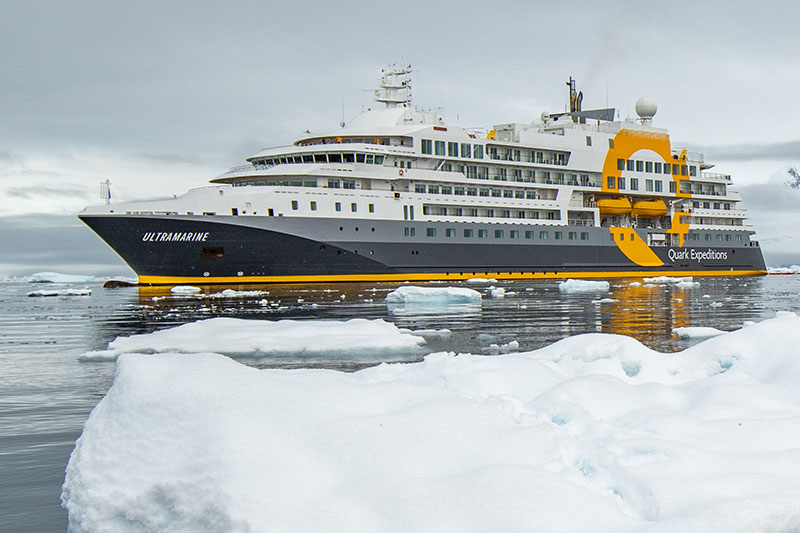
Quark Expeditions Ultramarine in Antarctic waters
#2 Best for Adventure-Seekers

Quark Expeditions

★★★★ Founded 1991 • Polar-only operator

Quark Expeditions, a polar-only operator since 1991, introduced helicopter-assisted shore landings to Antarctic expedition cruising — a capability that unlocks remote ice shelves and mountain ridges inaccessible to inflatable boats. The Ultramarine carries up to 199 passengers and is equipped with two helicopters and 20 Zodiacs, enabling simultaneous multi-activity programs across multiple landing sites. With a route portfolio spanning the Antarctic Peninsula, Weddell Sea, and Ross Sea, Quark offers one of the most geographically diverse Antarctica cruise programs available to independent travelers.

ShipsUltramarine, World Explorer
CapacityUp to 199 pax
Founded1991
Price TierPremium
Helicopter Landings Zodiac Cruising Ice Camping IAATO Member
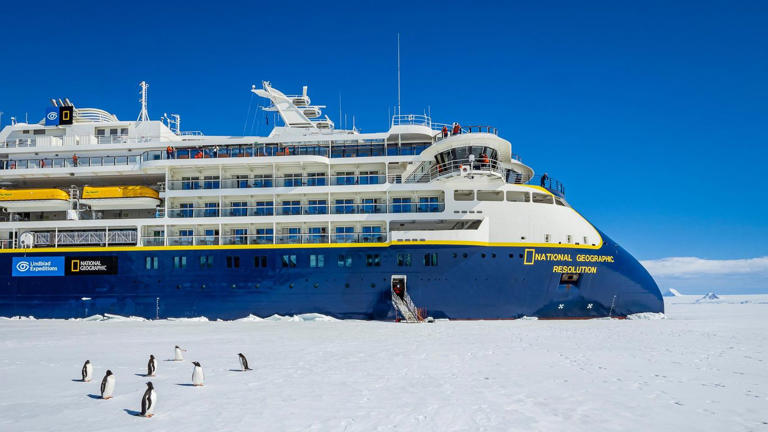
National Geographic Explorer — Lindblad Expeditions vessel in Antarctica
#3 Best for Science & Photography

Lindblad Expeditions / National Geographic

★★★★ Founded 1979 • NatGeo Partnership

Lindblad Expeditions operates under a long-term co-branding partnership with National Geographic, deploying scientists, photographers, and naturalists aboard every departure — a model that transforms the guest experience from passive observation to active scientific engagement. The National Geographic Explorer carries a remotely operated vehicle (ROV) capable of filming Antarctic seafloor ecosystems at depths up to 300 meters, providing guests access to imagery rarely captured on commercial voyages. Guests contribute data to ongoing NatGeo-supported marine biology and cetacean monitoring projects, making each Antarctica cruise a direct contribution to Antarctic science.

ShipsNG Explorer, NG Resolution
Capacity~148 passengers
Founded1979
Price TierPremium
ROV Underwater Exploration Citizen Science Photography Program IAATO Member
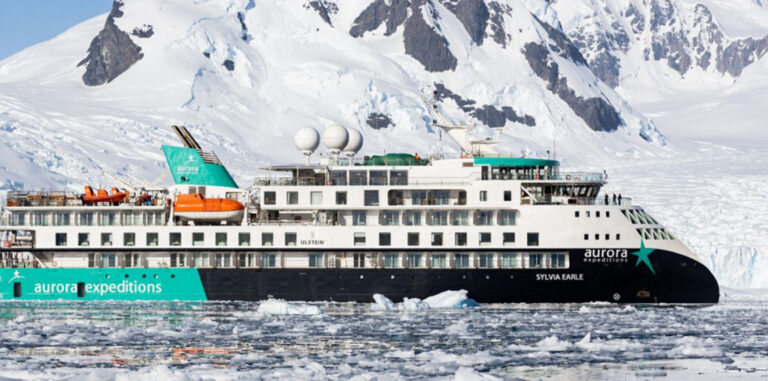
Aurora Expeditions Greg Mortimer with X-Bow hull design in Antarctic waters
#4 Best for Active Travelers

Aurora Expeditions

★★★★ Founded 1991 • Pioneered ice camping

Aurora Expeditions pioneered overnight ice camping in Antarctica — a program that allows guests to spend a night on the polar plateau under the southern sky, a bucket-list experience widely imitated but rarely matched in execution. Both fleet ships feature the patented X-Bow® hull design, which cuts through wave energy rather than riding over it, reducing motion and improving sea-keeping on the Drake Passage crossing. With a 1:10 guide-to-guest ratio and activities including kayaking, paddleboarding, and mountain walks, Aurora delivers a high activity density that consistently earns recognition among adventure-focused expedition operators.

ShipsGreg Mortimer, Sylvia Earle
Capacity130 passengers
HullX-Bow® wave-piercing
Price TierMid-range–Premium
Overnight Ice Camping Kayaking & Paddleboarding Mountain Walks IAATO Member
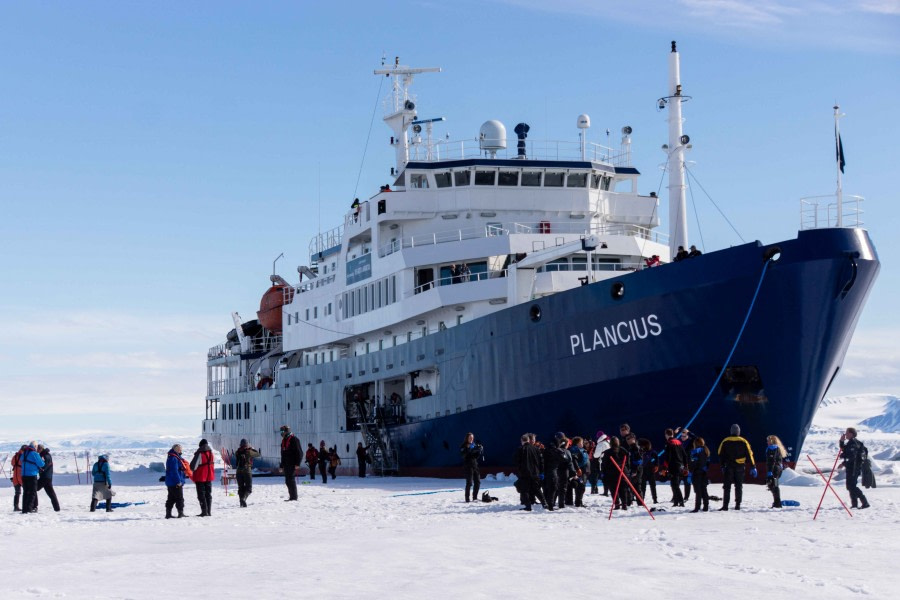
Oceanwide Expeditions MV Plancius in Antarctic waters
#5 Best Value in Ranking

Oceanwide Expeditions

★★★★ Founded 1996 • True expedition focus

Oceanwide Expeditions maintains the most price-competitive fleet in this ranking without sacrificing IAATO compliance or expedition quality — a combination that makes Antarctica accessible to travelers priced out by luxury operators. The Ortelius and Plancius, both carrying under 120 passengers, are converted research vessels with ice-strengthened hulls ideally suited to the Antarctic Peninsula and Weddell Sea. A true-expedition approach to onboard amenities is offset by an experienced polar guide team and a destination portfolio that includes Weddell Sea emperor penguin visits — among the rarest Antarctic wildlife encounters available on commercial voyages.

ShipsOrtelius, Plancius, Hondius
Capacity114–174 pax
Founded1996
Price TierBudget-friendly
Weddell Sea Routes Emperor Penguin Access Ice Camping IAATO Member

HX Hurtigruten Expeditions

★★★★ Founded 1896 • Hybrid-powered fleet

HX Hurtigruten Expeditions operates the world's first hybrid-powered expedition ships — the Roald Amundsen and Fridtjof Nansen — which reduce fuel consumption by up to 20% through battery-assisted propulsion, reflecting the company's pledge to achieve zero-emission operations by 2030. Onboard Science Centers equipped with microscopes, specimen collection tools, and data terminals allow guests to participate in ongoing citizen science research monitoring Antarctic marine ecosystems. With larger vessel capacity, IAATO landing rotations are applied, resulting in longer wait times between shore excursions compared to smaller-vessel operators; this trade-off is offset by richer onboard programming.

ShipsFridtjof Nansen, Roald Amundsen
CapacityUp to 530 pax
PropulsionHybrid diesel-electric
Price TierMid-range
Hybrid Propulsion Citizen Science Science Centers IAATO Member

Ponant

★★★★ Founded 1988 • French luxury expedition

Ponant's Le Commandant Charcot is the world's only luxury hybrid-electric polar icebreaker, carrying a PC2 ice classification that enables penetration of multi-year pack ice to reach destinations no other commercial vessel can access — including Peter I Island, the Amundsen Sea, and deep Weddell Sea positions. PC2 ice class additionally enables winter and shoulder-season voyages when emperor penguins are breeding on sea ice, an encounter otherwise limited to government-supported icebreaker expeditions. French culinary excellence, a spa, and a concert hall set Ponant apart in the ultra-luxury segment, though the larger vessel size means IAATO landing rotations apply more frequently than on smaller expedition ships.

ShipsLe Commandant Charcot, Le Boréal
Capacity245–264 pax
Hull ClassPC2 polar icebreaker
Price TierUltra-luxury
Helicopter Landings PC2 Ice Class Amundsen & Weddell Sea IAATO Member

Silversea Expeditions

★★★★ Founded 1994 • All-suite luxury ships

Silversea Expeditions delivers one of the finest guide-to-guest ratios in expedition cruising — a 1:12 relationship between expert guides and passengers that enables personalized attention during every shore landing, with individual expedition briefings and post-landing debriefs. The Silver Endeavour, with PC6 ice-class certification and capacity for just 100 guests, is among the most intimate luxury expedition ships operating in Antarctica, making simultaneous IAATO-compliant landings possible on every departure without rotation. All-inclusive pricing — covering shore excursions, house wines, spirits, and gratuities — provides cost transparency that distinguishes Silversea from operators who itemize activities separately.

ShipsSilver Endeavour, Silver Cloud
Capacity100–200 pax
Guide Ratio1:12 guide-to-guest
Price TierUltra-luxury
All-Inclusive 1:12 Guide Ratio PC6 Ice Class IAATO Member

Scenic Luxury Cruises

★★★★ Founded 1986 • Six-star Discovery Yacht

Scenic Eclipse is the only expedition ship in Antarctica carrying both a submarine and helicopters — a combination that allows guests to observe Antarctica from above the ice, at water level, and to depths of 30 meters beneath the polar sea in the same voyage. The Discovery Yacht concept integrates six-star hotel standards with expedition capability, including a spa, multiple specialty restaurants, and butler service, redefining what is achievable on a polar expedition ship. Capacity of 228 passengers results in IAATO landing rotations, but the three-dimensional exploration program ensures guests are continuously engaged with the environment regardless of landing schedule.

ShipsScenic Eclipse, Eclipse II
Capacity228 passengers
UniqueSubmarine + Helicopter
Price TierUltra-luxury
Submarine Dives (30m) Helicopter Flights Six-Star Service IAATO Member

Viking Expeditions

★★★★ Expedition fleet est. 2021 • Science-first

Viking Octantis and Viking Polaris were purpose-built for scientific expedition, with a full-deck science laboratory, Mission Control operational center, and research partnerships with leading universities — making Viking's Antarctica cruise program unique in its institutional commitment to citizen science participation. The ships carry multi-person submarines capable of diving to 200 meters, enabling guests to observe deep-sea Antarctic ecosystems accessible to no other commercial operator, from comb jellyfish to deep-sea coral communities. Viking's expedition philosophy draws on a Scandinavian explorer heritage, offering culturally rich onboard programming that complements the physical engagement of Antarctic shore landings and Zodiac operations.

ShipsViking Octantis, Viking Polaris
Capacity378 passengers
ScienceFull-deck laboratory
Price TierPremium
Submarine to 200m University Research Citizen Science IAATO Member

Antarctica Cruise Operator Comparison 2026

Side-by-side comparison of all 10 IAATO-certified expedition operators. Scroll right on mobile.

# Operator Passengers Key Ships Unique Feature Best For Price Tier Website
2 Quark Expeditions Up to 199 Ultramarine, World Explorer Helicopter-assisted landings Adventure-seekers Premium Visit →
3 Lindblad / NatGeo ~148 NG Explorer, NG Resolution ROV filmmaking, NatGeo scientists Science & photography Premium Visit →
4 Aurora Expeditions 130 Greg Mortimer, Sylvia Earle X-Bow® hull, overnight camping pioneer Active travelers Mid-range Visit →
5 Oceanwide Expeditions 114–174 Ortelius, Plancius, Hondius Emperor penguin Weddell Sea access Budget-conscious Budget Visit →
6 HX Hurtigruten Up to 530 Fridtjof Nansen, Roald Amundsen Hybrid-electric, citizen science Eco-conscious Mid-range Visit →
7 Ponant 245–264 Le Commandant Charcot, Le Boréal PC2 icebreaker, Amundsen Sea access Extreme routes & luxury Ultra-luxury Visit →
8 Silversea Expeditions 100–200 Silver Endeavour, Silver Cloud 1:12 guide ratio, all-inclusive Ultra-luxury Ultra-luxury Visit →
9 Scenic Luxury Cruises 228 Scenic Eclipse, Eclipse II Helicopter + submarine on same ship Splurge/once-in-lifetime Ultra-luxury Visit →
10 Viking Expeditions 378 Viking Octantis, Viking Polaris Full-deck science lab, 200m submarine Science & curious minds Premium Visit →

How to Choose the Best Antarctica Cruise for You

Four key factors that determine the quality of your Antarctica expedition experience.

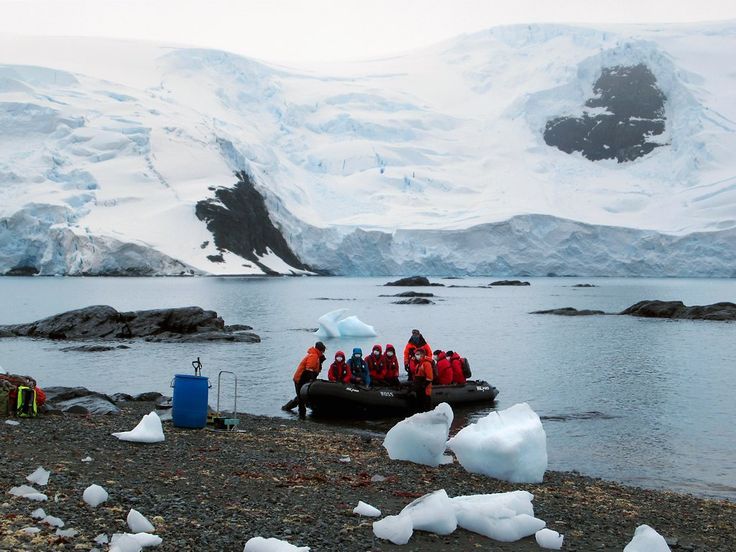
Zodiac landing on Antarctic shore with expedition passengers

Why Ship Size Matters

IAATO's landing site rules restrict simultaneous landings to 100 passengers per site — a regulation shaped by the Antarctic Treaty to protect fragile penguin colonies and nesting seabirds. Ships carrying more than 100 passengers must therefore rotate landing groups, meaning some guests wait aboard while others go ashore. An expedition ship with 114 passengers can land everyone simultaneously; a ship carrying 530 passengers runs four or five consecutive landing groups. The practical result: passengers on smaller ships spend significantly more time in direct contact with Antarctic wildlife per voyage day than those on larger vessels.

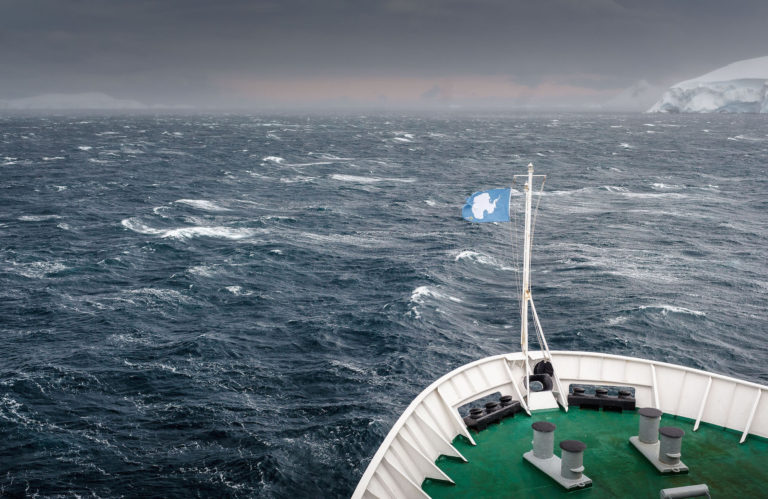
Drake Passage expedition ship crossing rough Antarctic seas

Drake Passage vs. Fly the Drake

The Drake Passage — an 800-kilometer stretch of open ocean separating Cape Horn from the South Shetland Islands — is the standard crossing for Antarctica expedition cruises departing from Ushuaia, Argentina. Crossing typically takes 48 hours each way; conditions range from glassy calm (the "Drake Lake") to significant swell (the "Drake Shake"). Many operators offer fly-cruise options: a 2-hour flight from Punta Arenas direct to King George Island, skipping the Drake and adding two full expedition days. Fly-cruise eliminates the maritime crossing experience — which itself includes albatross sightings, cetacean observations, and Southern Ocean immersion — so the choice depends on your appetite for the full expedition arc versus maximizing time ashore in Antarctica.

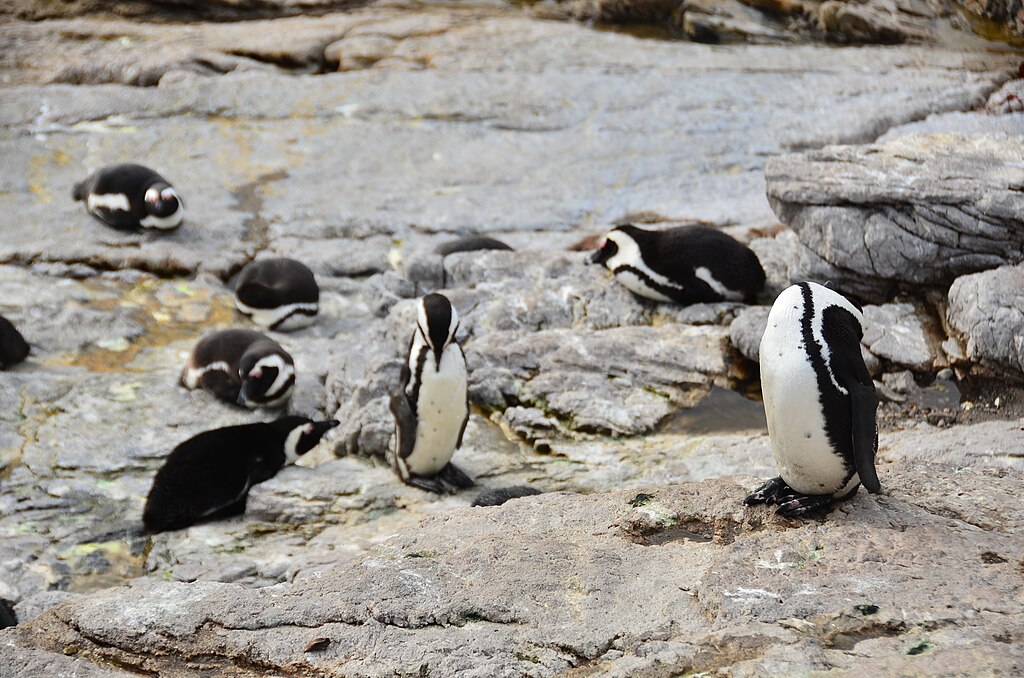
Gentoo penguin colony on Antarctic Peninsula shore in November

Season Guide: Oct–Mar 2026

The Antarctica cruise season runs from late October to early March, driven by sea ice coverage and wildlife cycles. October–November offers pristine snowscapes, courting penguin behavior, and fewer ships — ideal for photographers. December–January delivers peak activity: penguin chicks, whale feeding, extended daylight (up to 20 hours), and the warmest conditions (2–8°C). February–March features independent penguin chicks, whale concentrations in ice-free bays, and the autumn light palette preferred by experienced photographers. South Georgia departures — combining king penguins at St Andrews Bay with the sub-Antarctic wildlife of the Falkland Islands — operate year-round but peak October through February.

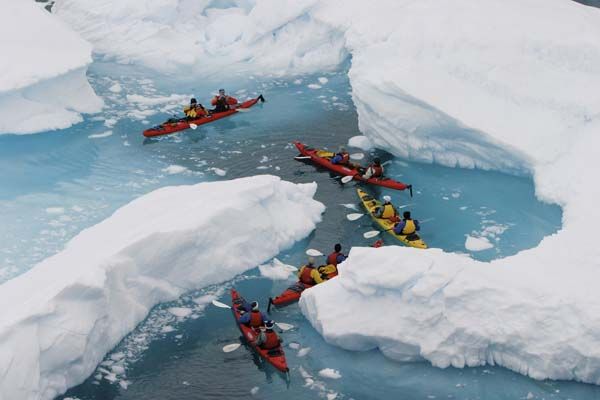
Kayakers paddling alongside Antarctic icebergs during expedition

Activity Range: Zodiac to Submarine

All operators in this ranking include Zodiac cruising — the core of any Antarctic expedition experience. Above that baseline, available activities vary significantly by operator and voyage price. Zodiac-only expeditions (Oceanwide, some HX routes) prioritize wildlife observation from inflatable craft near ice cliffs, glacier fronts, and penguin beaches. Kayaking and camping add 2–4 hours of active exploration (Aurora, Quark, Poseidon). Helicopters unlock aerial perspectives and remote sites inaccessible by Zodiac (Quark, Ponant, Scenic). Submarines reveal the underwater Antarctic ecosystem — sea floor, comb jellyfish, and deep coral communities — accessible only on Scenic Eclipse and Viking ships. Each additional activity tier adds cost; the sweet spot for most travelers is an operator offering Zodiac cruising plus optional kayaking or camping as standard inclusions.

Antarctica Cruise Costs 2026: What to Budget

Expedition cruise pricing varies by ship class, voyage duration, cabin category, and season. Use this framework to match budget to operator.

Budget-Friendly
$6,000–$9,000

Standard cabin, 10–12 day Antarctic Peninsula. Operators: Oceanwide Expeditions. True expedition style, limited luxury. IAATO-compliant.

Mid-Range
$9,000–$15,000

Comfortable ships, smaller capacity, better time ashore. Operators: Poseidon (from $8,577), Aurora, HX Hurtigruten. Best balance of quality and value.

Premium
$15,000–$25,000

Purpose-built ships, expert naturalist teams, extensive activity programs. Operators: Quark, Lindblad/NatGeo, Viking Expeditions.

Ultra-Luxury
$25,000+

All-suite ships, fine dining, butlers, submarines, helicopters. Operators: Ponant, Silversea, Scenic Luxury Cruises. Extreme route access (Ponant PC2).

What's Typically Included vs. Extra

Usually included: Zodiac operations, standard excursions, parkas, expedition boots, meals, non-alcoholic beverages, port taxes, IAATO fees, and gratuities at most premium operators.
Usually extra: Optional kayaking, ice camping, and helicopter programs; alcoholic beverages at budget operators; tips at budget/mid-range operators; travel insurance; pre/post-voyage hotels.
Silversea and Scenic Eclipse offer genuine all-inclusive pricing. At all other operators, verify the excursion inclusion policy before booking.

Best Antarctica Cruise Routes & Itineraries for 2026

Antarctica expedition cruises follow four primary geographic routes. Each offers a distinct wildlife and landscape profile.

10–12 Days • Most Popular

Antarctic Peninsula

The classic entry-point route. Departs Ushuaia via Drake Passage to the Antarctic Peninsula — visiting Paradise Bay, Neko Harbor, Deception Island, and the Lemaire Channel. Dense gentoo and chinstrap penguin colonies, humpback whale encounters, and blue-ice glacier fronts.

Operators: All 10 in this ranking offer Antarctic Peninsula departures.

17–21 Days • Wildlife Highlight

South Georgia & Falklands

Combines the sub-Antarctic Falkland Islands (black-browed albatross, Magellanic penguins) with South Georgia Island — home to the world's largest king penguin colony at St Andrews Bay (300,000+ birds) and the largest elephant seal breeding beaches. Includes Shackleton historical sites.

Operators: Poseidon, Quark, Lindblad, Aurora, Oceanwide, Ponant, Silversea.

14–18 Days • Specialist Route

Weddell Sea & Emperor Penguins

The Weddell Sea — east of the Antarctic Peninsula — offers drifting tabular icebergs, pack-ice navigation, and the only commercial access to emperor penguin colonies breeding on sea ice. Requires an ice-strengthened hull. One of the most requested and rarest Antarctic encounters.

Operators: Oceanwide (Snow Hill Island), Ponant (Le Commandant Charcot), Quark.

20+ Days • Rare Expedition

Full Antarctica Circuit

A circumnavigation of the Antarctic continent, visiting the Ross Sea, McMurdo Sound, Cape Adare, and the Balleny Islands — sites of the Heroic Age of Exploration. The Ross Ice Shelf (the size of France) and Dry Valleys are highlights inaccessible on any other commercial route. Departures operate once or twice per season.

Operators: Quark Expeditions, Lindblad Expeditions, Ponant.

Frequently Asked Questions: Antarctica Cruises

Answers to the most common questions about booking and experiencing an Antarctica expedition cruise.

What is the best time of year for an Antarctica cruise?

The Antarctica cruise season runs from late October to early March, timed with the Southern Hemisphere summer when sea ice retreats and wildlife peaks. November offers the least crowded waters, pristine snowscapes, and penguin courtship displays. December and January are peak season: penguin chick hatching, long daylight hours (up to 20 per day), and the best whale-watching conditions as krill-rich waters attract humpback and minke whales. February and March feature independent penguin chicks learning to swim, continued whale concentrations, and autumn light that photographers prize — while booking competition eases compared to December–January peak.

For South Georgia and Falkland Islands routes, the season extends from late October through February, with November–December optimal for king penguin chick nurseries at St Andrews Bay.

How long is a typical Antarctica expedition cruise?

The most common Antarctica cruise itinerary covers the Antarctic Peninsula in 10–12 days, including two Drake Passage crossings of approximately 48 hours each. Of the 10–12 days, typically 5–7 are spent in Antarctic waters, with 4–6 landing days depending on weather and ice conditions. Fly-cruise options (flying over the Drake Passage) can compress the same Antarctic itinerary into 8–9 days by eliminating the sea crossing.

South Georgia and Falklands combined itineraries run 17–21 days. Ross Sea expeditions and Full Antarctica Circuit voyages require 20–27 days. Longer itineraries dramatically increase wildlife encounter variety; the Antarctic Peninsula alone hosts gentoo, chinstrap, and Adélie penguins — South Georgia adds king penguins, wandering albatross, and fur seals.

What is IAATO and why does it matter?

IAATO — the International Association of Antarctica Tour Operators — is the industry self-regulatory body that sets environmental, safety, and wildlife interaction standards for commercial Antarctic voyages. Founded in 1991, IAATO coordinates the Antarctic Treaty System's tourism provisions, which restrict commercial vessel operations to protect the continent's unique ecosystem.

Key IAATO rules include the 100-passenger simultaneous landing limit per site, mandatory biosecurity protocols to prevent non-native species introduction, minimum setback distances from nesting penguins and seals, and waste management standards requiring zero discharge into Antarctic waters. All 10 operators in this ranking are current IAATO members — booking with a non-IAATO operator carries regulatory, environmental, and safety risks that reputable expedition travel agents advise against.

Is the Drake Passage dangerous?

The Drake Passage — separating Cape Horn and the South Shetland Islands across 800 kilometers of open Southern Ocean — is the world's most turbulent sea crossing, where Atlantic, Pacific, and Southern Oceans converge without the moderating influence of continental landmass. Expedition ships operating in this corridor are built and certified for Antarctic conditions, with ice-strengthened hulls and stabilization systems; passenger safety records on IAATO-member vessels are excellent.

In practice, crossings range from mirror-calm (the "Drake Lake," occurring roughly 30% of the time) to 6–9 meter swells (the "Drake Shake"). Modern expedition ships ride these conditions well; seasickness prevention medication (scopolamine patches, dimenhydrinate) is recommended and available aboard all operators in this ranking. The crossing is a genuine expedition experience that most travelers retrospectively describe as a highlight — Southern Ocean albatross sightings and the sense of arriving at the world's most remote continent begin during the crossing.

Can you camp in Antarctica on a cruise?

Yes — overnight ice camping in Antarctica is available as an add-on program with several operators in this ranking, including Poseidon Expeditions, Aurora Expeditions, and Quark Expeditions. Camping guests sleep in bivouac-style arrangements on snow, using expedition sleeping bags rated to -20°C, in groups of 10–20 supervised by expert polar guides. Toilet facilities are provided via portable waste containment units, in full compliance with Antarctic Treaty waste management protocols.

Ice camping is typically offered as an optional enhancement at additional cost, subject to weather and ice conditions. Aurora Expeditions pioneered the activity in commercial expedition cruising and is widely regarded as offering the most refined camping program. Most participants rate it among the most memorable experiences of their voyage — spending a night on the Antarctic plateau under the polar sky, hours from the nearest permanent human settlement.

What is the difference between an expedition cruise and a regular cruise?

An expedition cruise uses an ice-strengthened vessel carrying fewer than 200 passengers (per IAATO guidelines) to access remote polar, sub-polar, or wilderness destinations. The defining characteristic is active ashore participation: guests land daily via Zodiac inflatable boats to walk among wildlife, explore glacier fronts, and engage with the landscape under the guidance of expert naturalists, glaciologists, and wildlife biologists. The itinerary is inherently flexible — daily plans adjust to weather, ice, and wildlife opportunities.

A mainstream or ocean cruise operates large ships (typically 1,000–5,000 passengers) on fixed schedules to populated ports, with entertainment-focused onboard programming and shore excursions by tour bus or tender. Such ships cannot access Antarctica under IAATO rules. The experiential gulf between the two formats is significant: expedition cruise guests routinely walk within meters of penguin colonies, observe orca and humpback whales from Zodiac height, and make landfall on beaches where no permanent human settlement exists.

How far in advance should I book an Antarctica cruise for 2026?

For the 2026–2027 Antarctica season (October 2026–March 2027), booking 12–18 months in advance secures the best cabin selection and early-booking pricing on the most popular operators and itineraries. Peak departures — particularly late November through early January Antarctic Peninsula voyages with smaller operators like Poseidon Expeditions — routinely sell out 12–14 months before departure. South Georgia combination itineraries, which are inherently longer and less frequent, sell out even earlier.

Last-minute deals (within 60–90 days of departure) occasionally appear for less popular cabin categories on larger ships or shoulder-season October/March departures, but availability is unreliable and varies significantly by operator and season. If Antarctica is a priority travel destination for 2026, booking now rather than waiting is strongly advised — particularly for private cabin categories and specific month preferences.

Ready to Plan Your Antarctica Expedition in 2026?

Use our buyer's guide and comparison table to match the right operator to your budget, travel style, and preferred itinerary — then book direct with your chosen operator for the best rates.